


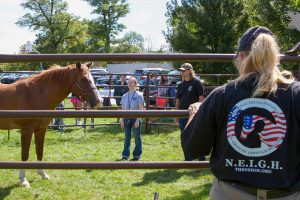
Daemen University’s Veteran Services department and Student Veterans Association (SVA) Club welcomed the National Equine Institute of Growth through Healing (N.E.I.G.H.) to campus on September 10 in recognition of World Suicide Prevention Day.
Miniature and full-sized horses graced Daemen’s north lawn, giving faculty, staff, and students the opportunity to pet and interact with the animals while learning more about the positive impact of equine-assisted therapy for veterans and first responders.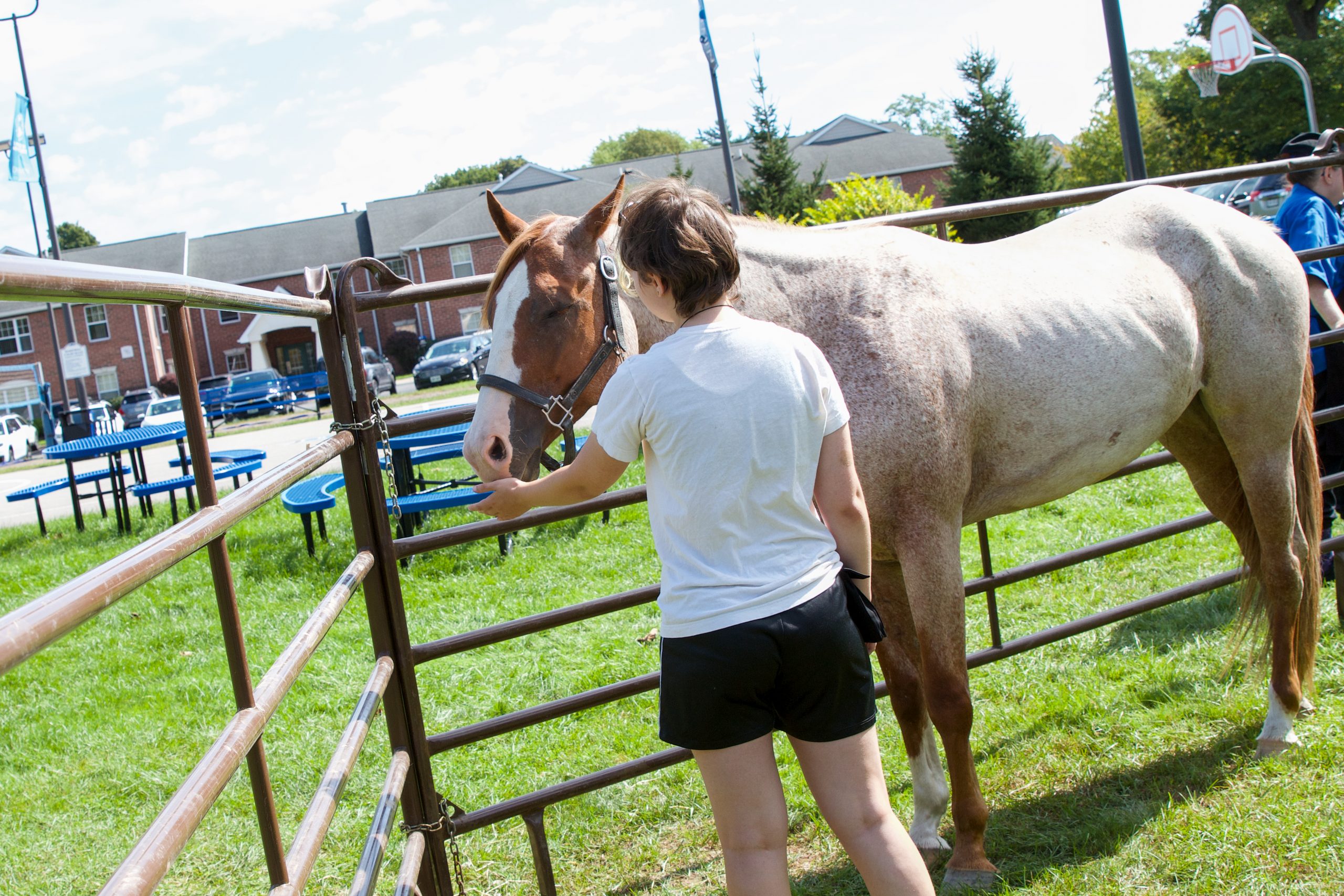
Kirk Gollnitz, a Marine veteran and N.E.I.G.H. facilitator, said the horses saved his life. After experiencing PTSD and struggling to find an effective counselor, he came across N.E.I.G.H. and started working with the horses. “Within one hour, the horse pulled more out of me than my counselor got out of me in six months,” he said. This pivotal experience inspired him to get more involved with N.E.I.G.H. and become a facilitator.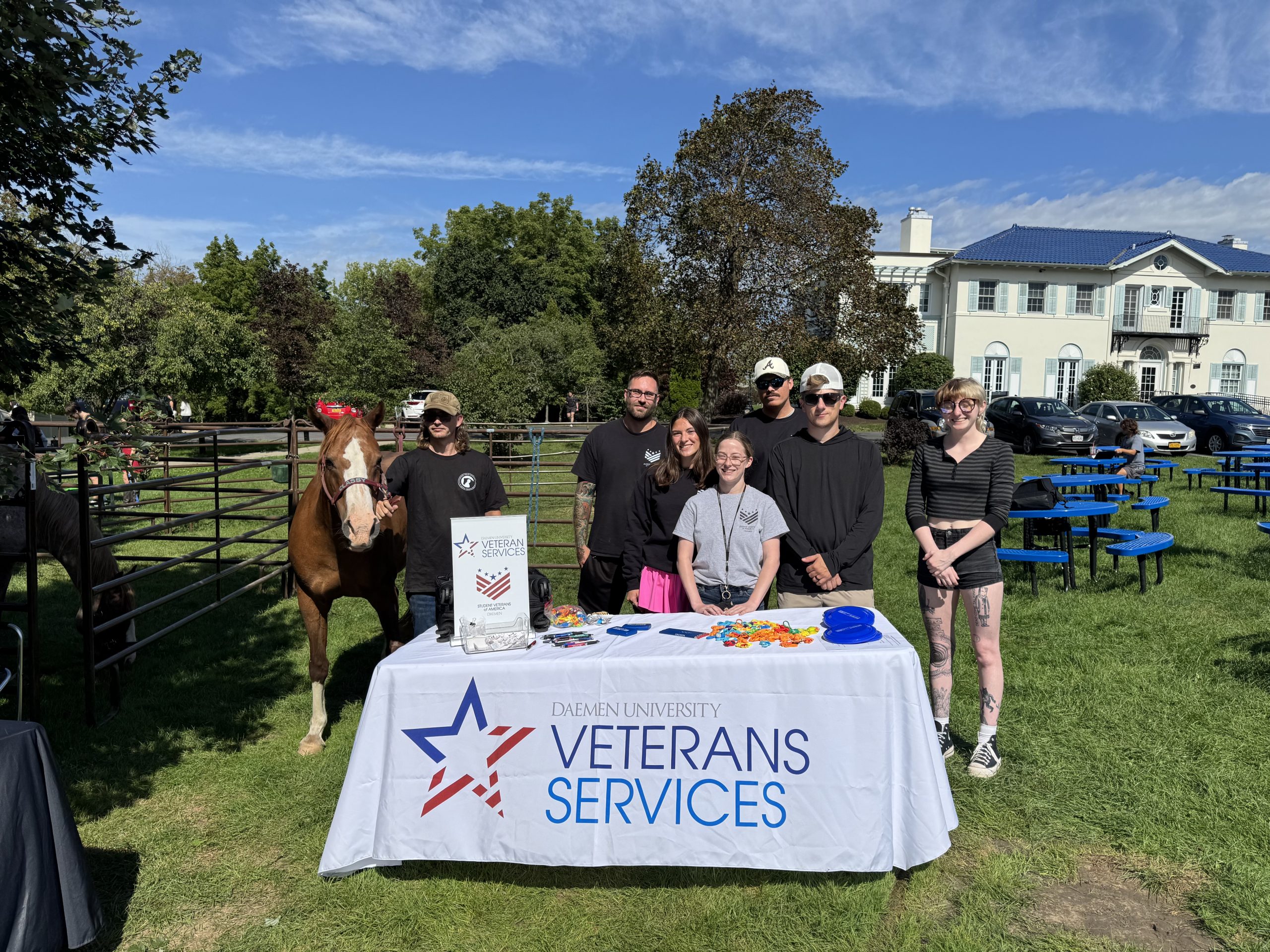
N.E.I.G.H. was established in 2019 and focuses on suicide prevention and burnout prevention for veterans and first responders. Dawn Samuelson, founder and program director, created the organization after losing her sister, Constance, a veteran, to suicide.
“Dawn combined her experience as a first responder, firefighter, and crisis worker with her love of horses to create N.E.I.G.H.,” said Taylor Samuelson, N.E.I.G.H. executive director. “We wanted to bring a resource that breaks stigmas, encourages more help-seeking, and offers more support for veterans and first responders. Having a fun, unique twist with the novelty of horses brings about powerful results.” 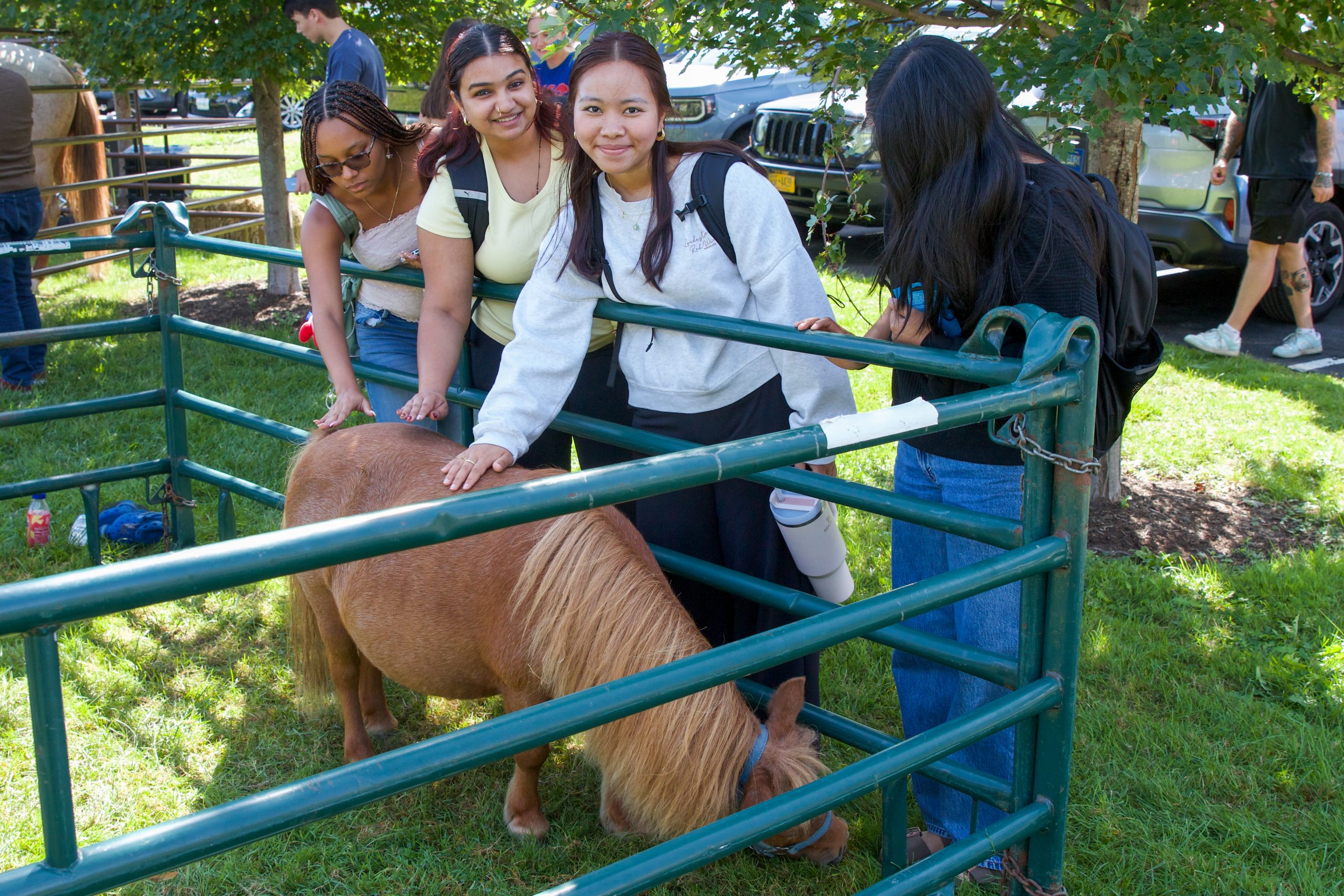
Robyn Swan, veteran and director of veteran services knows first-hand how important support for veterans and military families is. “As a department, we want to bring the campus and students to an understanding that it’s not just veterans or dependents. It’s everybody. To be vulnerable enough to be able to ask for help and tell a story through chronic exposure and PTSD therapy creates healing and growth.”