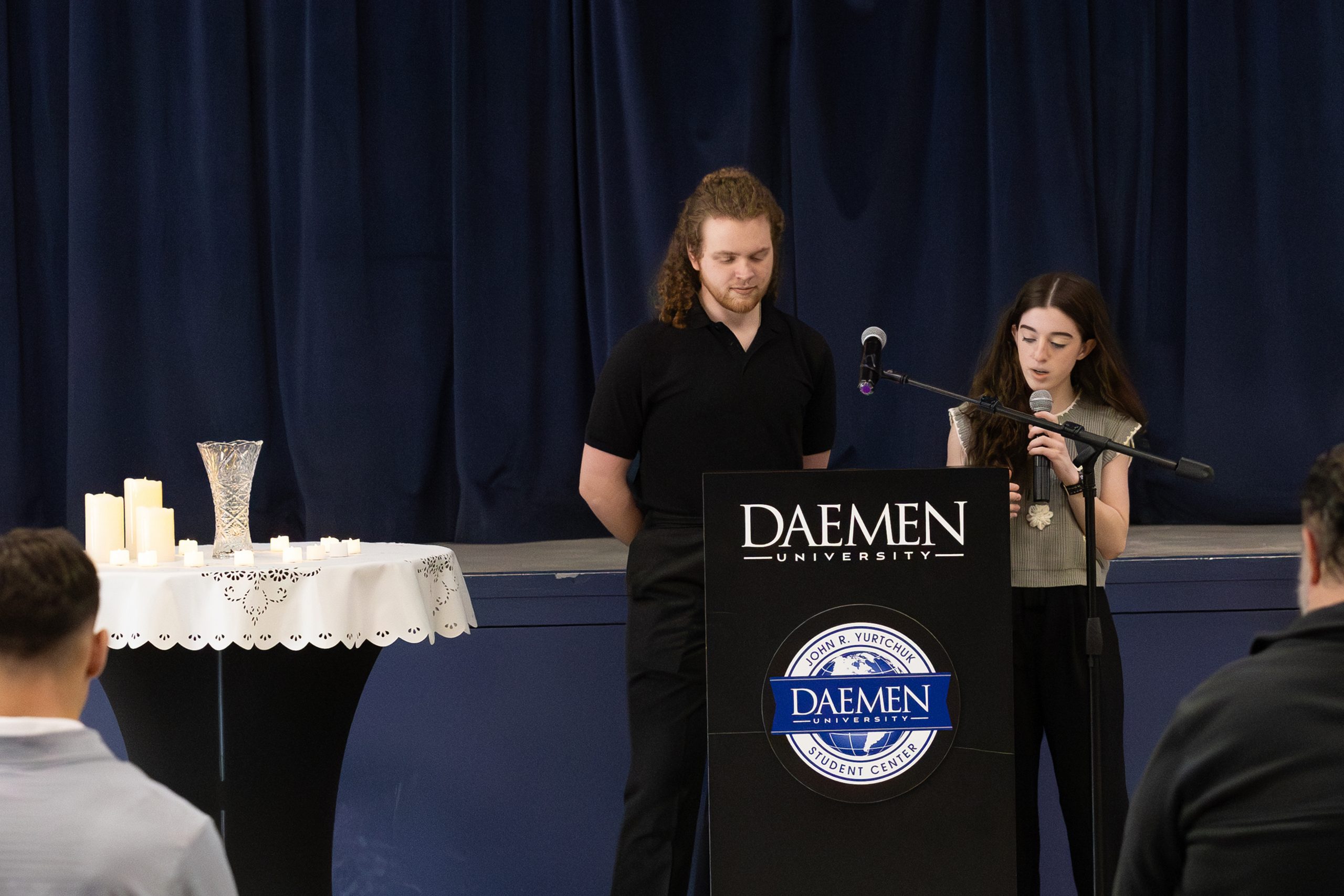
Glenn Sharkey and Allyson Germinara
Daemen University’s Scott Bieler College of Health Professions held a memorial service on April 16 to honor the memory of those who made anatomical gifts for use in the Graduate Gross Anatomy Lab.
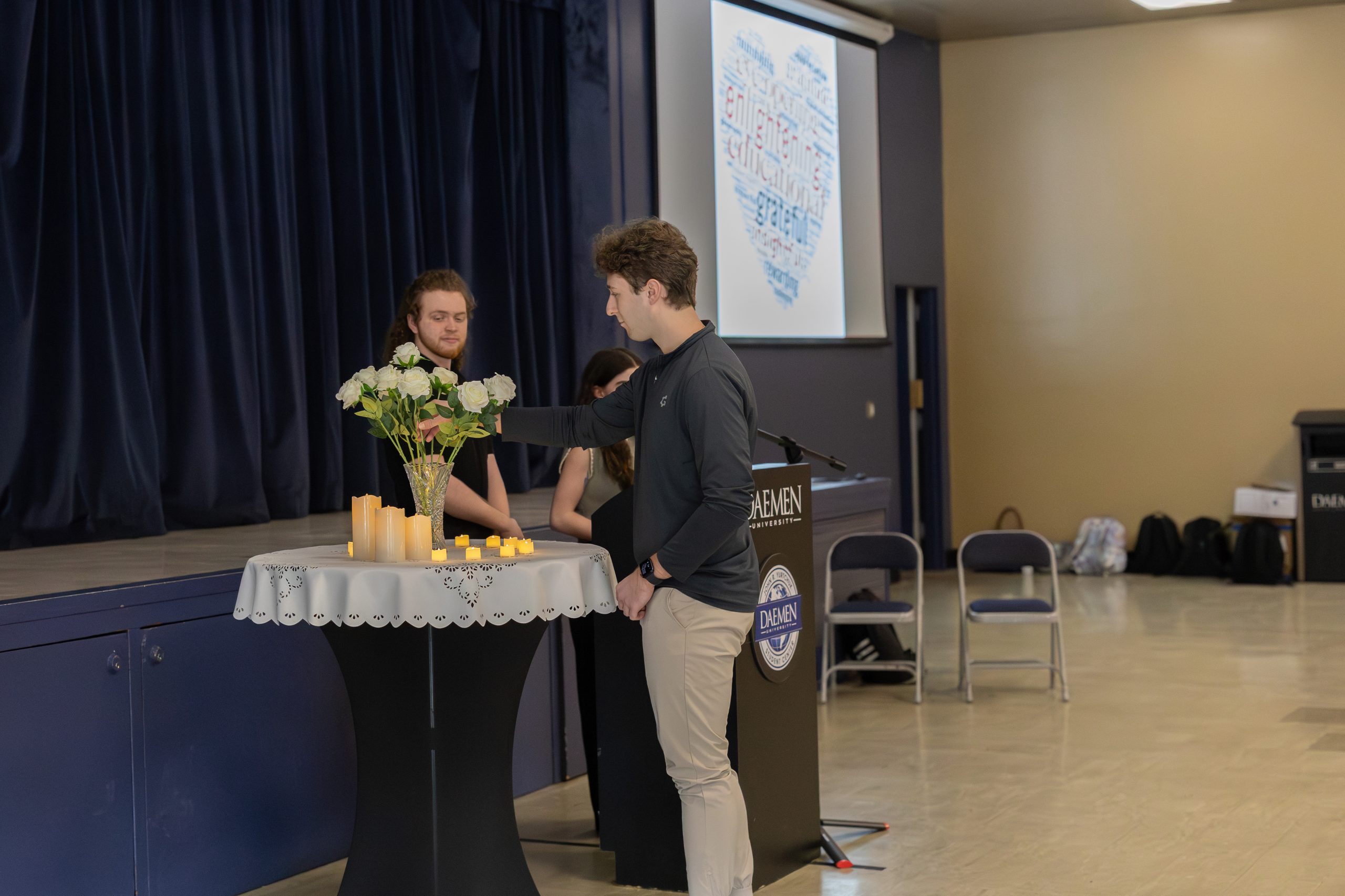
Glenn Sharkey, doctor of physical therapy class of 2028, and Allyson Germinara, physician assistant class of 2028, served as masters of ceremony for the service.
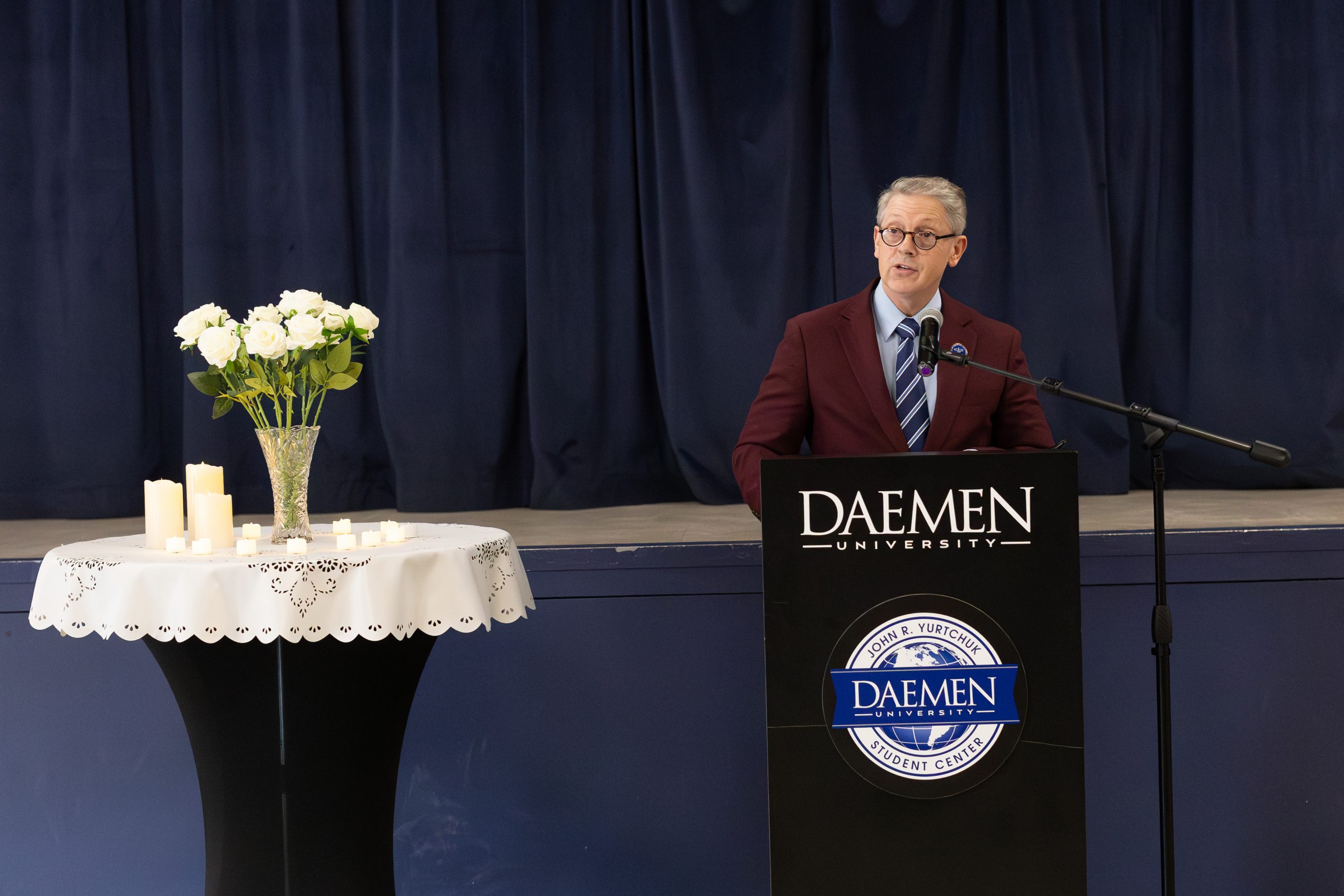
Dr. Greg Ford
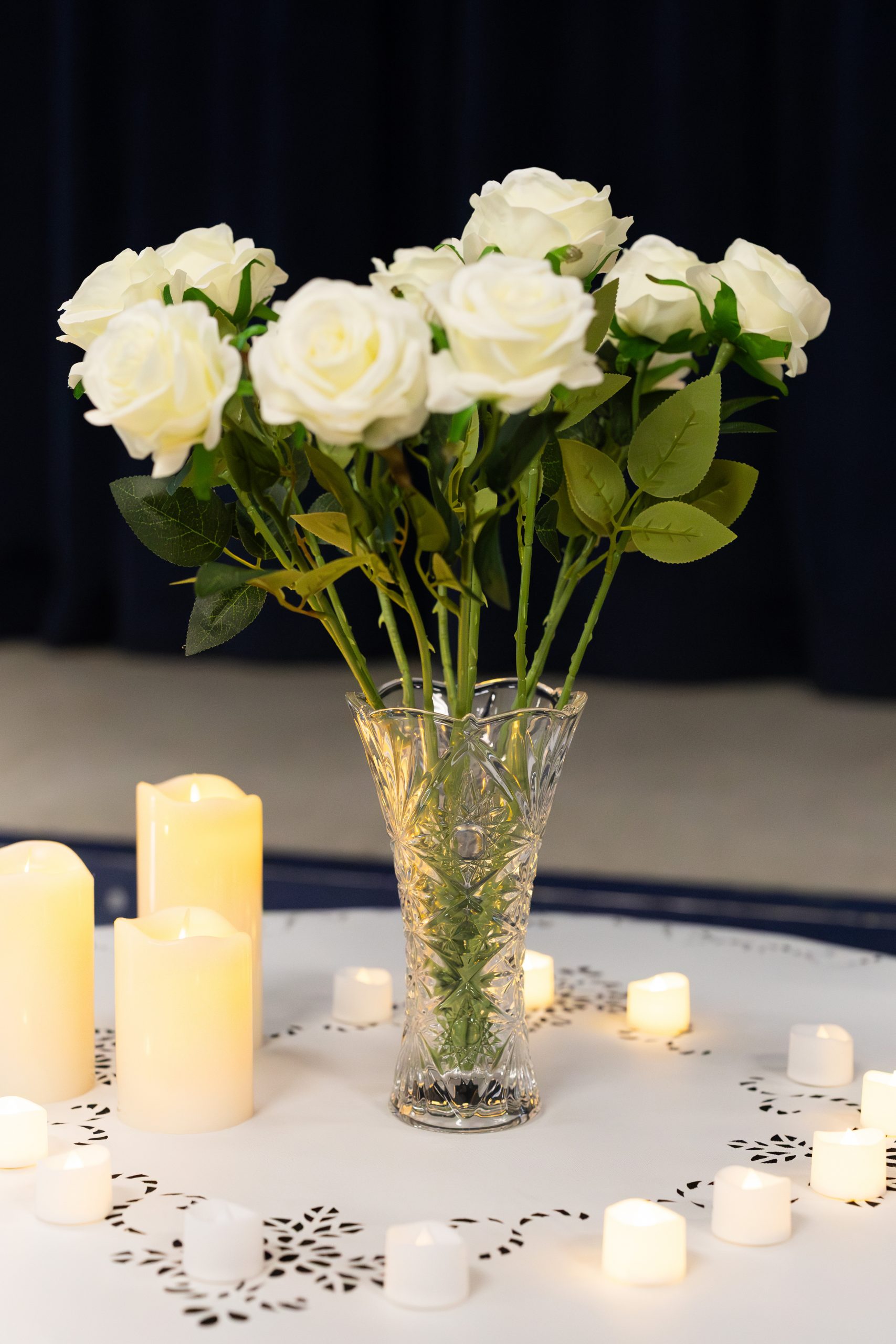
Class of 2027 and 2028 physical therapy and physician assistant students placed 12 white roses into a vase, one in memory of each donor, as Sharkey and Germinara explained the rose ceremony’s significance. “Let what you’re witnessing serve as a reminder that, through generosity and sacrifice, these donors continued to teach and inspire us to be skilled and compassionate caregivers long after they departed this life,” Germinara said.
Dr. Greg Ford, founding dean of the Scott Bieler College of Health Professions, welcomed attendees, assuring them, “I am certain that every one of you has treated each gifted donor with dignity and respect, and that you will each be a compassionate PA or PT.”
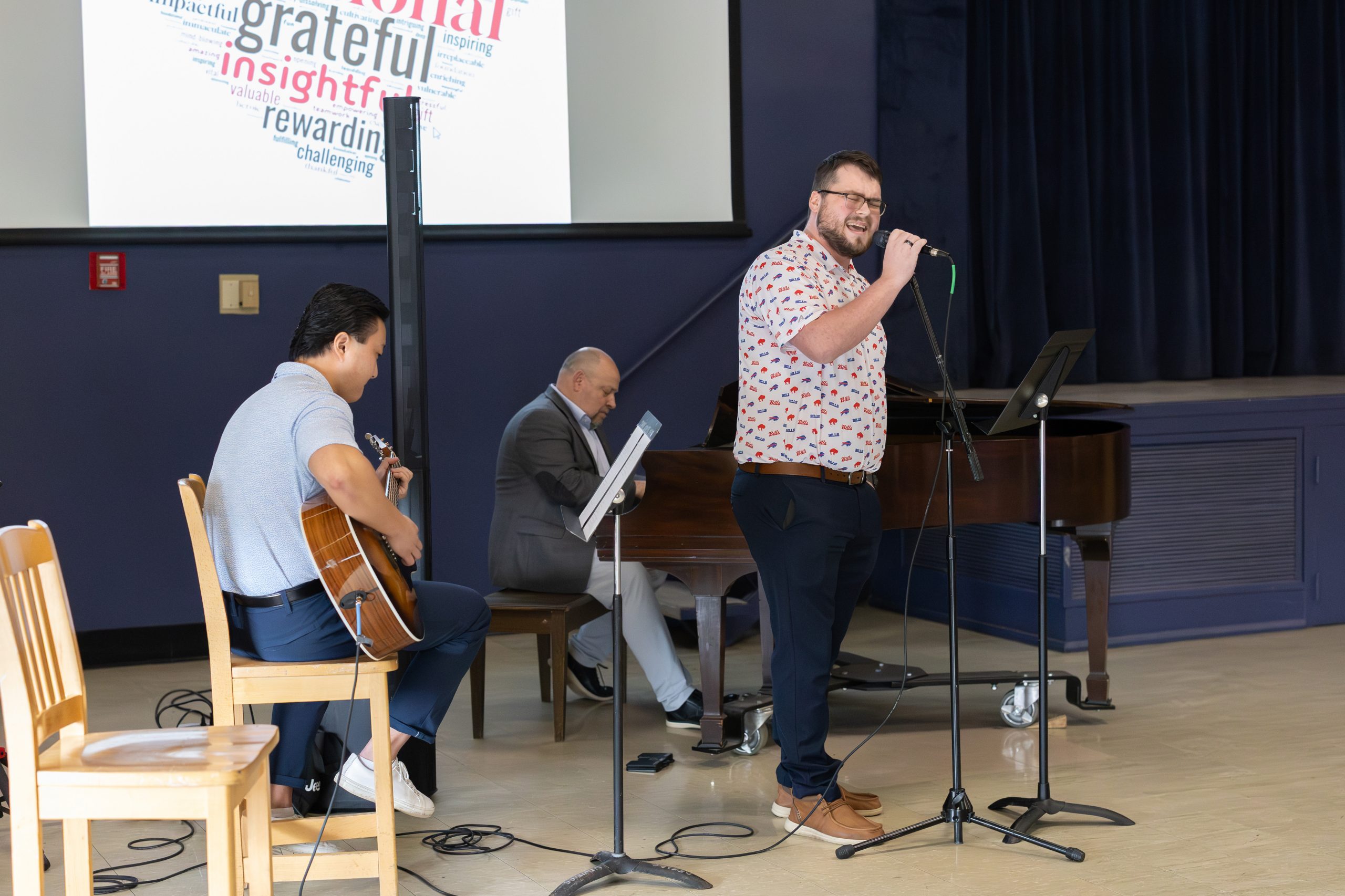
Andrew Lee, Sean Carrigan, and Dr. Gary Styn
Johnathan Dion and Alaina Roberts, doctor of physical therapy class of 2028, shared a brief history of anatomical gifts.
Sean Carrigan and Andrew Lee, physician assistant class of 2027, performed “Just One Word,” with piano accompaniment by Dr. Gary Styn, clinical assistant professor and coordinator of graduate anatomical services. Buffalo Chamber Players, Janz Castelo de Armas, violist, and Abigail Rockwood Puehn, pianist, performed throughout the service.
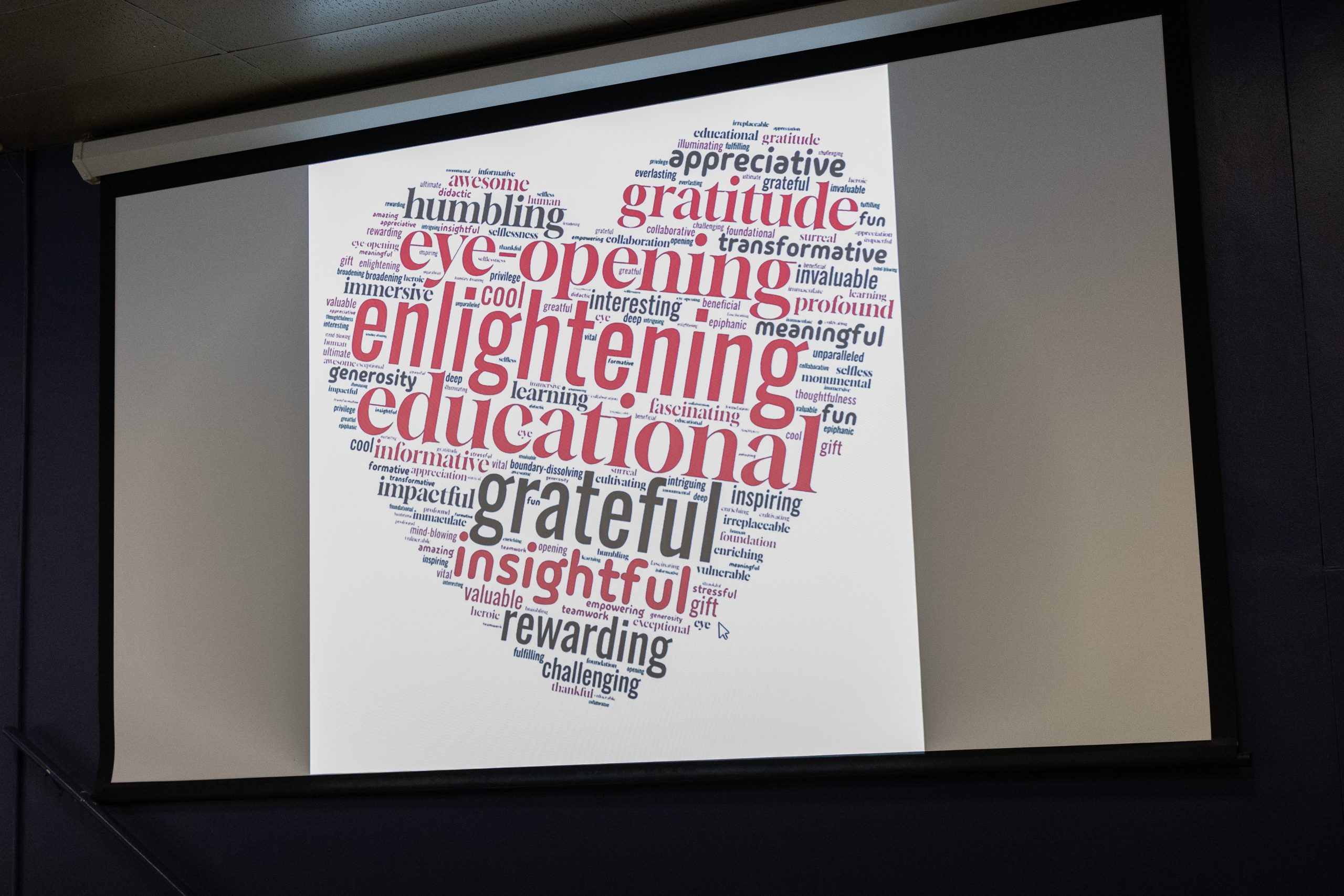
Jillian Ball and Jackson Crone, physician assistant class of 2028, and Jacob Fethers, doctor of physical therapy class of 2028, presented a word cloud to express students’ profound gratitude.
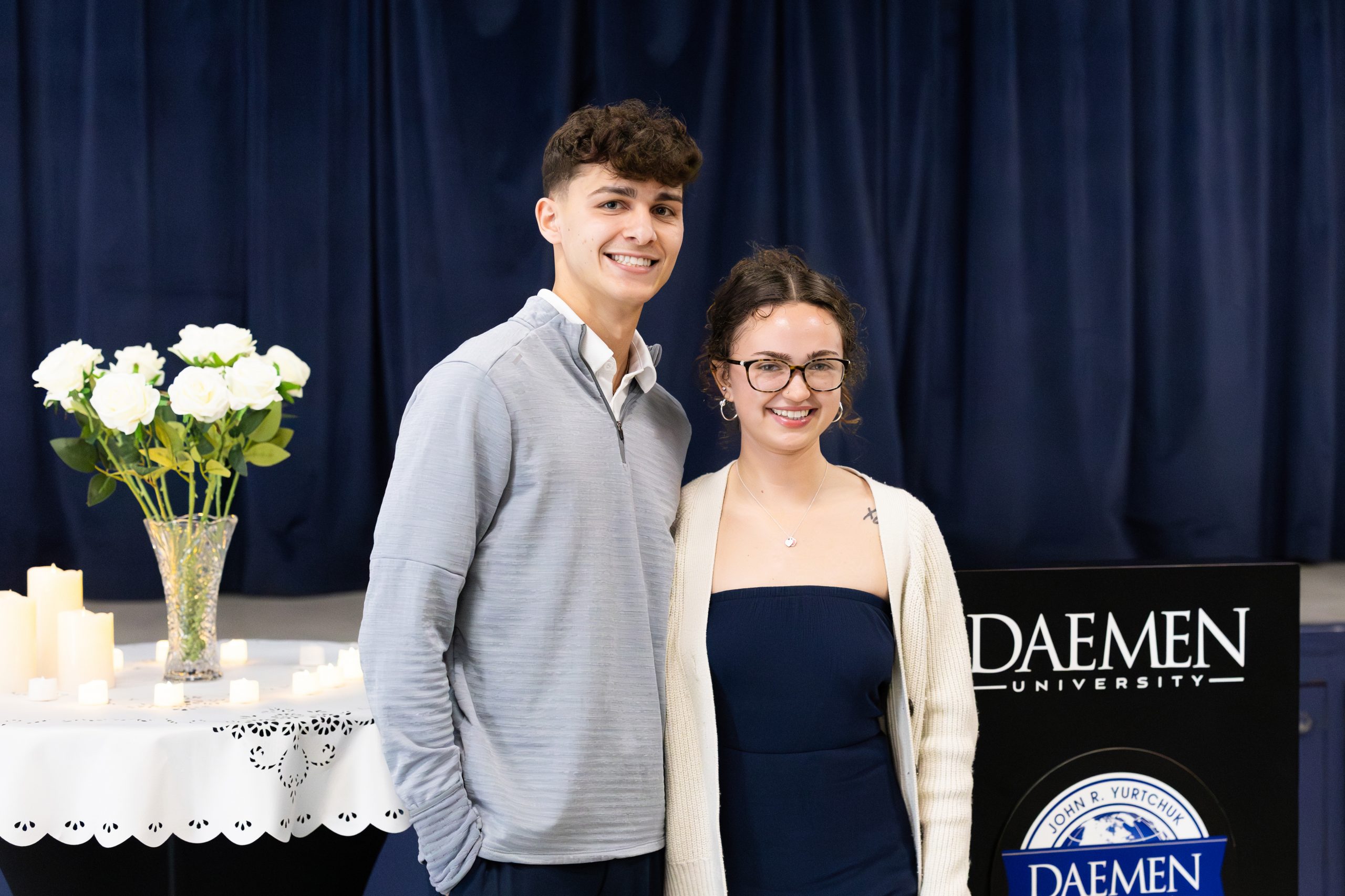
Cody Cavuoto and Autumn Gambino
Cody Cavuoto and Autumn Gambino, doctor of physical therapy class of 2028, closed the service by sharing personal reflections. Gambino said, “The 12 individuals who donated each had different stories. Still, they shared the same final purpose, to give students the ultimate gift: the ability to learn without the consequences of becoming personally involved.” Cavuoto added, “This experience has taught us something beyond textbooks, something that no lecture or book could ever fully convey. It has reminded us of the fragility of life, the complexity of the human body, and the responsibility that we hold as future caregivers.”